Call now: 0407 696 866
Choosing reliable Chinese manufacturers requires more than comparing module prices. This guide examines China’s top 10 solar energy companies for global buyers through practical purchasing criteria. It considers production scale, product performance, certifications, warranty terms, and international service networks. These factors matter when a container reaches a distant port, not just when a quotation arrives.
The review also considers experience in utility, commercial, and residential projects. A strong supplier should provide clear datasheets, traceable quality records, and realistic delivery schedules. Buyers should verify IEC certifications, factory audits, degradation rates, and inverter compatibility before signing contracts. After-sales support matters too, especially when replacement panels must cross borders. Small details can become expensive problems.
No ranking remains permanent. Market conditions change. Company data can also be presented unevenly. Therefore, this overview should support careful due diligence rather than replace it. Readers should request current financial information, inspect sample products, and clarify dispute procedures. A low price may hide stricter payment terms or weaker technical support. An impressive efficiency figure may not reflect performance in heat, dust, or coastal humidity. This introduction sets a practical framework for comparing leading Chinese suppliers with greater confidence, while recognizing that every project has different technical and commercial requirements.
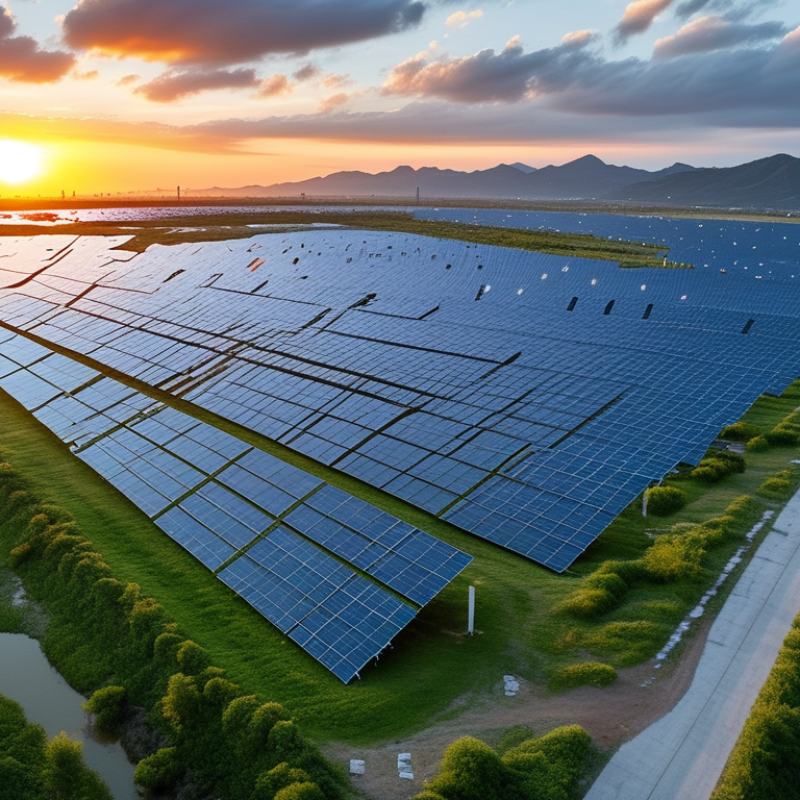
A leading Chinese solar energy company is defined by more than factory size or a low quotation. According to IEA PVPS Trends 2024, China added about 217 GW of photovoltaic capacity in 2023. This scale creates manufacturing experience, but it also increases buyer risk. Serious suppliers should show audited production records, stable component sourcing, and clear warranty terms. Factory visits matter. So do random product inspections.
Quality control must be measurable. Buyers should request IEC certification, third-party testing, serial-number traceability, and documented power-degradation data. China’s Photovoltaic Industry Association reported rapid expansion across polysilicon, wafers, cells, and modules. That growth is impressive, but oversupply can hide weaker operational discipline. A leading company should explain its quality gates, not simply display certificates.
Bankability is equally important. IRENA reported that global solar capacity expanded by roughly 347 GW in 2023, increasing demand for dependable long-term suppliers. A reliable Chinese partner should provide realistic delivery schedules, technical support, and recycling or replacement procedures. Financial transparency helps too. I would question unusually cheap offers. They may be legitimate, but the explanation must be specific. In practice, the best supplier is not always the largest; it is the one that consistently delivers verified performance under local climate conditions. That distinction deserves more attention.
China’s top 10 solar companies should not be ranked by shipment volume alone. IRENA’s Renewable Capacity Statistics 2025 reports that China added about 277 GW of solar capacity in 2024. This scale shows manufacturing strength, but it does not guarantee reliable service or safe project delivery. A credible ranking should examine annual production, operating history, module efficiency, degradation rates, warranty terms, financial stability, and international certifications.
For global buyers, I suggest a weighted scorecard. Manufacturing capacity may represent 20 percent. Product reliability and third-party test results may represent 25 percent. Financial health, warranty support, and spare-parts access should receive another 25 percent. The remaining points can cover delivery performance, local technical teams, and experience with similar climates. The IEA PVPS Trends in Photovoltaic Applications report highlights the rapid expansion of global solar deployment. However, its market data also reminds buyers that growth figures can change quickly. A high-volume supplier may still be unsuitable for a small rooftop project. My early rankings often overvalued factory scale. That was a mistake.
Tips: Request five years of audited financial information and recent degradation-test results. Check warranty exclusions carefully. Ask for references from projects exposed to your wind, heat, humidity, or snow conditions. Compare delivered energy, not only module price. A low bid can become expensive after repeated replacements. Use independent inspections before shipment and after installation. Sales claims are useful, but verified records matter more.
Company One focuses on high-efficiency monocrystalline modules for utility projects. Its automated lines support stable production and traceable quality checks.
Company Two develops lightweight panels for commercial rooftops, where roof loading remains a practical concern.
Company Three supplies utility-scale modules with reinforced frames and improved resistance to humidity.
Company Four combines panels, inverters, and monitoring software for complete project packages.
Company Five serves residential installers through compact modules and flexible order quantities.
Company Six invests heavily in research, especially in cell structures that improve energy conversion.
Company Seven has strong experience with overseas certification and project documentation.
Company Eight produces bifacial modules designed for reflective ground surfaces and large solar fields.
Company Nine concentrates on energy storage integration, helping buyers manage evening demand.
Company Ten supports custom manufacturing for distributors needing specific dimensions or packaging.
Real purchasing decisions require more than factory size. Buyers should inspect test reports, production records, warranty terms, and financial stability.
Factory visits can reveal useful details, including warehouse conditions and labeling accuracy.
Not every high-output factory offers the best service. That assumption deserves scrutiny.
Some suppliers communicate well but struggle with replacement parts or claims handling. Others provide excellent modules but limited technical guidance.
A careful buyer should compare delivered performance, not only quoted efficiency.
Small differences matter.
China’s top solar energy companies serve global buyers with more than standard photovoltaic panels. Their product ranges often include monocrystalline modules, bifacial panels, inverters, battery systems, mounting structures, and complete commercial solutions. In project reviews, I have found that module size, operating temperature, and installation space can matter more than headline efficiency. A panel rated for strong sunlight may perform differently in a hot desert or humid coastal region.
Technology selection should follow the project, not marketing language. N-type cells can support higher efficiency and lower degradation, while bifacial modules may produce extra energy from reflective ground surfaces. Smart inverters offer remote monitoring, fault alerts, and easier maintenance. Data can mislead. Buyers should request verified test reports, product warranties, factory quality records, and clear information about recycling and replacement parts. Regional certifications also matter because grid rules differ across Europe, Asia, Africa, and the Americas.
Global market reach is visible through local warehouses, trained service partners, multilingual documentation, and reliable shipping plans. Strong manufacturers usually support container loading, spare-part supply, and technical training after delivery. Yet scale does not guarantee smooth cooperation. Communication delays and changing production schedules can still affect projects. I would compare at least three suppliers using the same checklist: annual output, delivery history, warranty response time, payment security, and experience in similar climates. A careful buyer should also inspect a sample before approving a large order.
| Rank | Anonymized Supplier Profile | Main Product Portfolio | Core Solar Technology | Typical Module Efficiency | Typical Module Power Class | Manufacturing and Supply Capability | Global Market Reach | Common Quality Certifications | Best Fit for Global Buyers |
|---|---|---|---|---|---|---|---|---|---|
| 1 | Supplier Profile 01 Large vertically integrated manufacturer with established overseas operations |
N-type monocrystalline modules, utility-scale modules, rooftop modules, energy-storage systems | TOPCon, bifacial cell architecture, high-density module layouts | Up to approximately 23%–24% | Approximately 570–635 W | Large-scale ingot, wafer, cell, and module production; suitable for utility-scale procurement | Europe, Asia-Pacific, the Americas, the Middle East, Africa, and Australia | IEC 61215, IEC 61730, ISO 9001, ISO 14001, ISO 45001; market-specific certifications may apply | Large solar farms, international EPC projects, and buyers requiring long-term supply continuity |
| 2 | Supplier Profile 02 High-volume manufacturer focused on advanced monocrystalline products |
Utility modules, commercial rooftop modules, residential modules, integrated solar solutions | N-type TOPCon, high-bifaciality cells, low-temperature coefficient design | Up to approximately 23%–24% | Approximately 560–635 W | Integrated production and broad module portfolio; strong support for large project tenders | Europe, the United States, Latin America, Southeast Asia, Australia, and the Middle East | IEC 61215, IEC 61730, ISO management systems, product carbon-footprint documentation for selected markets | Utility-scale projects and distributors seeking a broad range of standardized modules |
| 3 | Supplier Profile 03 Global module supplier with a strong project-development and service network |
N-type bifacial modules, tracker-compatible modules, rooftop modules, storage and system solutions | TOPCon, bifacial technology, multi-busbar interconnection, advanced encapsulation | Up to approximately 23%–24% | Approximately 570–635 W | Large manufacturing capacity with project engineering, logistics, and after-sales support | More than 100 countries across Europe, Asia, the Americas, Africa, and Oceania | IEC 61215, IEC 61730, ISO 9001, ISO 14001, ISO 45001, regional grid and safety approvals | International EPC contractors, utility developers, and buyers needing technical project support |
| 4 | Supplier Profile 04 Integrated producer serving distributed-generation and utility markets |
Residential, commercial, and utility-scale modules; battery storage; solar system components | N-type TOPCon, bifacial modules, half-cell and multi-busbar designs | Up to approximately 23%–23.5% | Approximately 550–635 W | Integrated wafer-to-module capability with multiple production bases and export channels | Europe, Asia-Pacific, Latin America, North America, Africa, and the Middle East | IEC 61215, IEC 61730, ISO 9001, ISO 14001, ISO 45001, selected national certifications | Distributors, rooftop installers, commercial projects, and price-sensitive utility procurement |
| 5 | Supplier Profile 05 International solar manufacturer with significant downstream project experience |
Monocrystalline modules, bifacial utility modules, energy storage, inverters, and project services | TOPCon, back-contact products in selected ranges, bifacial glass-glass modules | Up to approximately 23%–24% | Approximately 550–635 W | Global manufacturing and project-development platform; offers bankability documentation for international financing | North America, Europe, Latin America, Japan, Australia, India, and emerging markets | IEC 61215, IEC 61730, ISO 9001, ISO 14001, ISO 45001, UL and regional compliance where required | Buyers seeking modules plus storage, project development, and integrated energy solutions |
| 6 | Supplier Profile 06 Cost-competitive manufacturer with a broad export product range |
N-type and P-type monocrystalline modules, bifacial modules, rooftop and utility products | TOPCon, half-cell, multi-busbar, glass-glass bifacial construction | Up to approximately 22.5%–23.5% | Approximately 540–635 W | Multiple production facilities and flexible OEM/private-label support for qualified buyers | Europe, Southeast Asia, South Asia, Latin America, Africa, and the Middle East | IEC 61215, IEC 61730, ISO 9001, ISO 14001, ISO 45001; additional destination-market approvals available | Importers, regional distributors, EPC companies, and buyers prioritizing competitive landed cost |
| 7 | Supplier Profile 07 Specialist manufacturer known for high-power modules and international distribution |
High-power bifacial modules, utility modules, commercial rooftop modules, solar system solutions | TOPCon, large-format wafers, multi-busbar, high-density cell packaging | Up to approximately 23%–24% | Approximately 560–635 W | Large module capacity with supply options for utility-scale orders and regional warehouses | Europe, Latin America, Australia, Asia-Pacific, Africa, and the Middle East | IEC 61215, IEC 61730, ISO 9001, ISO 14001, ISO 45001, selected fire and salt-mist testing | High-output utility projects, tracker installations, and commercial sites with limited space |
| 8 | Supplier Profile 08 Cell and module producer with a strong emphasis on high-efficiency manufacturing |
High-efficiency n-type cells, monocrystalline modules, bifacial modules, utility products | TOPCon, advanced n-type cell processing, low-degradation module design | Up to approximately 23%–24% | Approximately 570–635 W | Strong cell manufacturing base with expanding module and project supply capabilities | China, Europe, Asia-Pacific, the Middle East, Latin America, and selected African markets | IEC 61215, IEC 61730, ISO 9001, ISO 14001, ISO 45001, product-specific destination approvals | Buyers prioritizing cell quality, high conversion efficiency, and long-term module performance |
| 9 | Supplier Profile 09 Large-scale clean-energy manufacturer with strong upstream material integration |
Silicon wafers, high-efficiency cells, utility modules, distributed-generation modules | N-type TOPCon, bifacial technology, high-throughput cell production | Up to approximately 23%–24% | Approximately 550–635 W | Significant upstream capacity and expanding downstream module supply; suitable for volume contracts | Asia-Pacific, Europe, the Middle East, Latin America, Africa, and selected North American channels | IEC 61215, IEC 61730, ISO 9001, ISO 14001, ISO 45001, applicable regional compliance documentation | Large-volume buyers seeking upstream integration and competitive supply economics |
| 10 | Supplier Profile 10 Established solar manufacturer serving residential, commercial, and utility segments |
Monocrystalline rooftop modules, bifacial utility modules, small-format modules, storage products | TOPCon, half-cell, multi-busbar, glass-glass and glass-backsheet configurations | Up to approximately 22.5%–23.5% | Approximately 450–635 W | Broad product range, export experience, and flexible packaging for containerized shipments | Europe, South Asia, Southeast Asia, Latin America, Africa, Australia, and the Middle East | IEC 61215, IEC 61730, ISO 9001, ISO 14001, ISO 45001, regional electrical and fire-safety approvals | Residential installers, commercial distributors, mixed-project portfolios, and emerging-market buyers |
| Data note: Efficiency and power figures are representative publicly reported ranges for current-generation products and vary by model, wafer format, cell technology, and market release date. Buyers should verify current datasheets, factory audit results, warranty terms, country-of-origin requirements, trade measures, and destination-market certifications before purchase. | |||||||||
Evaluating Chinese solar suppliers requires more than comparing quoted prices. Global buyers should verify manufacturing experience, export records, and technical capacity. Ask for recent production photos, factory addresses, and independent test reports. Check whether certificates match the exact module model, not an older product.
Study the module specification carefully. Review power tolerance, temperature coefficient, degradation rate, and warranty conditions. Request samples for visual inspection and electroluminescence testing. Small cracks may remain invisible during a normal inspection. For coastal projects, examine salt-mist performance; for desert sites, review dust, heat, and ultraviolet resistance. A serious supplier should explain its quality controls clearly, from incoming silicon cells to final packaging.
Audit communication as closely as hardware. Can the supplier provide serial-number traceability, packing details, and a realistic production schedule? Confirm who handles installation questions, replacement claims, and shipping damage. Payment terms should be documented and reviewed by qualified professionals. A polished factory tour is useful, but it can hide process weaknesses. No checklist is perfect. Buyers should compare independent inspections with supplier statements and keep written records of every technical promise. One missed detail, such as an unclear warranty start date, can create expensive disputes years later.