• Cleveland QLD 4163 Find us on Facebook

  • Top 10 Energy Solutions Solar Innovations You Should Know?

    In recent years, energy solutions solar have gained immense attention. These innovations promise to reshape how we harness and utilize solar power. With climate change and energy demands on the rise, exploring new solar technologies is crucial.

    The world is observing an increase in solar adoption. New technologies emerge, enhancing efficiency and accessibility. Solar panels are becoming more affordable, but challenges remain. Not every innovation is foolproof or easily implementable. Some ideas may lead to unforeseen consequences.

    Among various innovations, some stand out for their potential impact. These solutions can offer significant benefits but also require reflection on their sustainability and practicality. We must critically evaluate each advancement in energy solutions solar. This journey encompasses excitement, skepticism, and the need for deeper understanding.
    Top 10 Energy Solutions Solar Innovations You Should Know?

    The Rise of Solar Energy Technology Innovations

    The rise of solar energy technology innovations is transforming the energy landscape. According to a recent report by the International Renewable Energy Agency, solar power capacity surpassed 1,000 gigawatts in 2020. This growth is driven by increased efficiency and affordability. Breakthroughs in photovoltaic materials, such as perovskite cells, show promise. They may exceed 25% efficiency, compared to traditional silicon cells.

    Emerging solar technologies aim to tackle existing challenges. For instance, energy storage solutions are crucial for harnessing solar power effectively. Innovations like lithium-sulfur batteries hold potential. They could offer higher energy density than current options. However, issues like lifespan and cost remain.

    Moreover, integrating solar energy with smart grid technology can enhance distribution. This connection can reduce waste and improve energy management. Yet, the transition is not without hurdles. Infrastructure needs upgrading, and public acceptance varies. As we witness these advancements, it's essential to reflect on the broader implications for sustainability and accessibility. Balancing innovation with practical challenges is key to the future of solar energy.

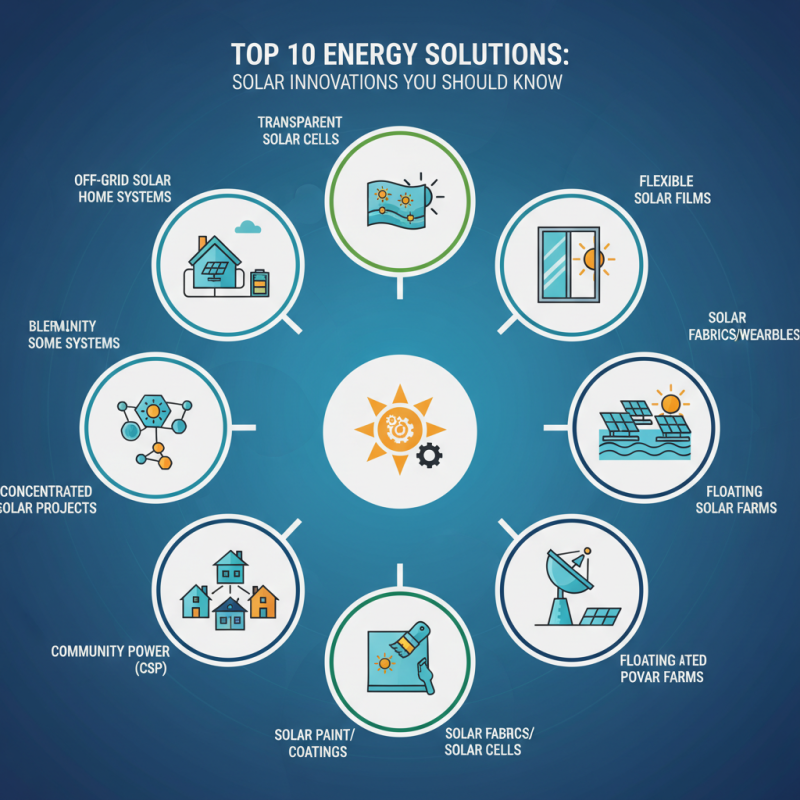
    Top 10 Energy Solutions Solar Innovations You Should Know

    Innovation Description Efficiency (%) Year Introduced
    Bifacial Solar Panels Capture sunlight from both sides to increase energy output. 20-25% 2016
    Floating Solar Farms Solar panels installed on water bodies to save land. 15-20% 2017
    Solar Roof Tiles Integrated solar technology into roofing materials. 18-22% 2018
    Concentrated Solar Power (CSP) Uses mirrors to focus sunlight for high-efficiency energy generation. 20-30% 2010
    Perovskite Solar Cells Cheap and easy-to-manufacture solar cells with high absorption. 15-25% 2012
    Solar Skins Customizable designs to blend solar panels into home aesthetics. 17-20% 2019
    Smart Solar Inverters Optimizes power output and monitors solar panel performance. 98% 2015
    Building-Integrated Photovoltaics (BIPV) Integrating solar energy into building construction materials. 15-22% 2019
    Advanced Energy Storage Systems Innovative batteries to store solar energy for later use. 90% 2020
    Thin-Film Solar Panels Lightweight and versatile technology suitable for various applications. 10-15% 2009

    Advancements in Photovoltaic Cell Efficiency

    Advancements in photovoltaic cell efficiency have taken the world by storm. Solar panels are becoming increasingly powerful and effective. New materials are now used to enhance energy conversion. Researchers are exploring perovskite materials, which promise higher performance. These innovations allow smaller panels to generate more energy.

    Recent breakthroughs have increased the efficiency of traditional silicon-based cells. The latest designs can capture sunlight better than ever. This means less space is needed for installations. However, challenges remain. Durability and long-term performance still require attention. Some designs may not last as long as expected.

    Integrating these new technologies into existing infrastructures can be tricky. Some systems struggle to accommodate new innovations. Retrofits may be costly or complex. Awareness of these issues is vital for consumers and industries. Despite the promise of higher efficiency, not all solutions may work seamlessly. Balancing innovation with practicality requires careful thought. Enhanced efficiency is exciting, but implementation must be realistic.

    Top 10 Energy Solutions Solar Innovations You Should Know

    This chart displays the advancements in photovoltaic cell efficiency over recent years, highlighting the increase in efficiency percentages among various innovations.

    Integrating Solar Power with Smart Grid Technology

    Integrating solar power with smart grid technology is a game changer for energy management. This combination allows for the efficient distribution of solar energy across communities. With smart grid systems, excess solar energy can be stored or redirected when needed. This flexibility enhances energy reliability and reduces waste.

    Imagine a local neighborhood equipped with smart meters. These devices communicate data in real time. When sunlight is abundant, homes can utilize that energy instead of drawing from traditional sources. It’s not without challenges. Some households may lack the initial investment for solar panels. Others may struggle with understanding smart technologies. These hurdles must be addressed for a seamless transition.

    The interaction between solar and smart grids can also lead to innovative solutions for energy storage. Batteries and other storage systems must evolve to keep pace with demand. There’s room for improvement to ensure every community can benefit. As we embrace these technologies, the potential for a sustainable energy future becomes clearer, albeit complex.

    Innovative Solar Storage Solutions for Better Energy Management

    Innovative solar storage solutions are changing how we manage energy. These technologies allow us to harness solar power effectively. For instance, advanced battery systems are now widely used. They store excess energy for later use, reducing reliance on the grid. This is particularly useful during peak hours when demand spikes.


    Smart energy management systems integrate solar storage with daily usage patterns. They analyze consumption data and optimize energy release. This approach ensures that stored energy is used when it is most needed. However, not all systems are created equal. Many users still face challenges with capacity and charging times.


    The future of energy management hinges on improving these technologies. There are still gaps in efficiency and user experience. Data shows that many households underutilize solar storage. This calls for better education and awareness among consumers. Energy independence is within reach, yet it requires thoughtful innovations and user engagement.

    Emerging Solar Applications in Agriculture and Urban Development

    Top 10 Energy Solutions Solar Innovations You Should Know?

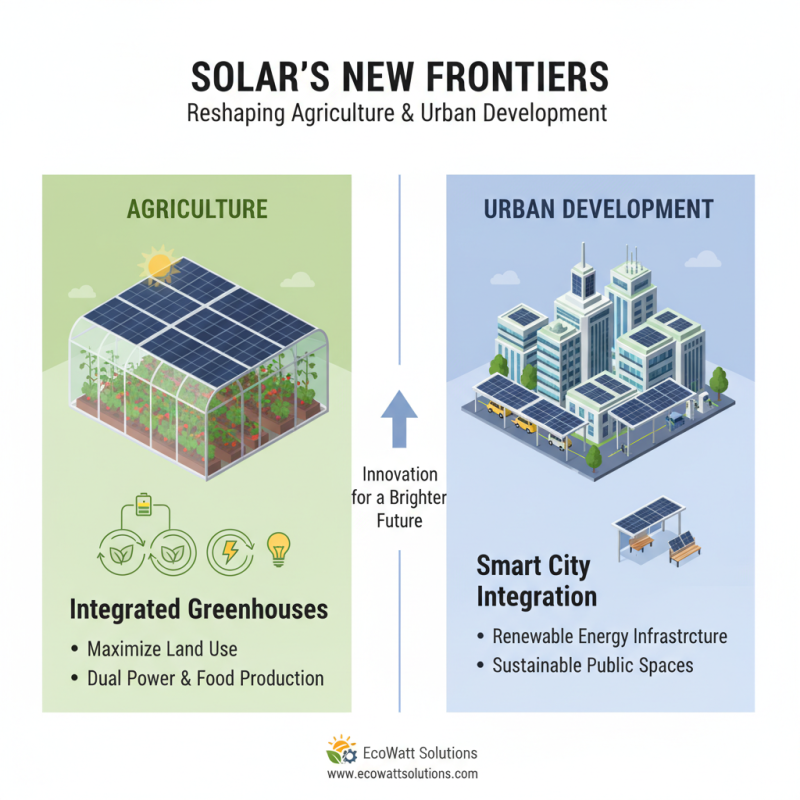
    Emerging solar applications are reshaping agriculture and urban development. In farming, solar panels are now integrated into greenhouses. This innovation maximizes land use while generating electricity. Picture lush crops growing under bright panels. The combination supports both energy needs and food production.

    Urban areas are also benefiting. Solar rooftops can provide energy for buildings. Some cities are promoting solar streetscapes. Urban gardens now share space with solar installations. However, these efforts often face challenges. Not all buildings can support solar installations. Some designs are complex and require significant investment.

    Yet, the potential for growth is immense. Farmers and city planners are experimenting with these technologies. Their results can inspire more sustainable practices. Collaboration and innovation can lead to breakthroughs. Still, the road ahead may be uneven. Balancing aesthetics and functionality requires careful thought. Progress depends on community involvement and regulatory support.