
• Cleveland QLD 4163 Find us on Facebook

  • How to Choose a Tricycle Motor Bike for Global Buying in 2026?

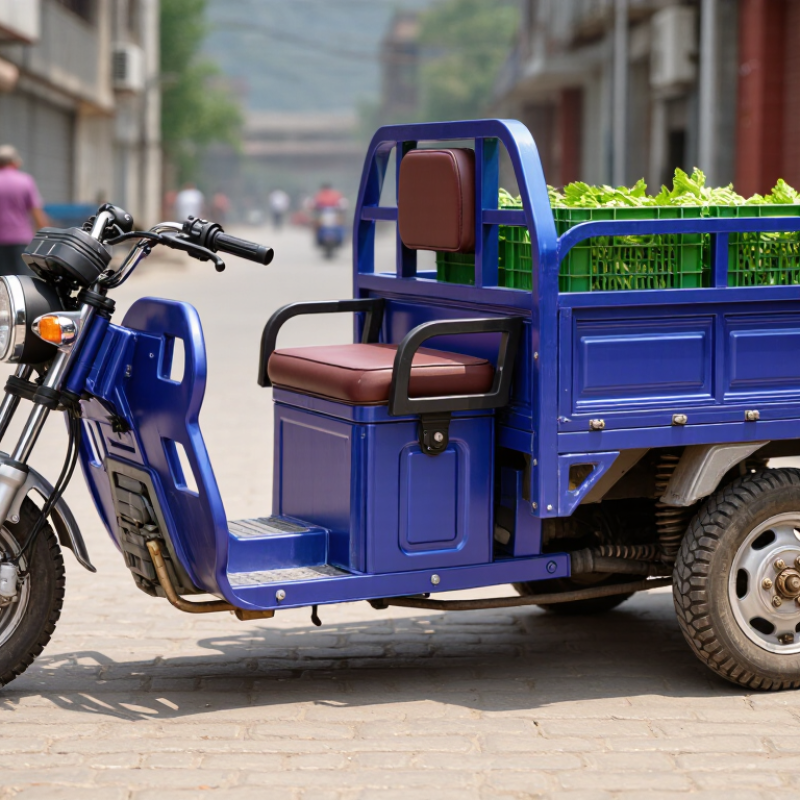
    Choosing a Tricycle Motor Bike for global buying in 2026 requires more than comparing prices and engine sizes. Buyers must match the vehicle with real working conditions, including road surfaces, cargo weight, weather, and daily distance. A model carrying vegetables through narrow market streets may need different features from one transporting tools across rural roads. Small details matter. Tire width, ground clearance, brake design, and frame strength can change operating safety and maintenance costs.

    This guide explains how to assess power systems, load capacity, fuel or battery performance, spare-parts access, and after-sales support. It also considers supplier reliability, production quality, warranty terms, and transparent technical documentation. Experienced importers should request videos of vehicle testing, component specifications, packing details, and inspection records before placing an order. A clean-looking product photo proves very little. Ask better questions.

    Global buyers must also confirm local requirements for vehicle registration, emissions, lighting, braking, labeling, and road use. Rules differ between countries and sometimes between regions. A supplier’s approval in one market may not satisfy another authority. Never assume compatibility. Verify it independently.

    Cost remains important, but the cheapest Tricycle Motor Bike can become expensive after shipping, repairs, downtime, and replacement parts. I have seen buyers focus heavily on the purchase price and overlook battery replacement or weak dealer support. That mistake is understandable, yet avoidable. No checklist is perfect. Careful testing, honest comparison, and a realistic operating plan create a safer buying decision for 2026.
    How to Choose a Tricycle Motor Bike for Global Buying in 2026?

    Define the Intended Use and Operating Environment

    Choosing a tricycle motor bike starts with its daily job, not its advertised power. Define the load, passenger count, route length, and working hours before comparing specifications. A market trader needs a stable cargo bed, low-speed control, and easy loading. A rural passenger operator may need stronger suspension, higher ground clearance, and weather protection.

    The operating environment changes every major decision. Measure road surfaces, gradients, flood exposure, dust, heat, and charging access. The 2023 World Bank Logistics Performance Index covered 139 economies and showed wide differences in infrastructure reliability. A vehicle designed for smooth urban roads may struggle on unpaved routes. That sounds obvious. It is often ignored. In hot regions, check battery cooling, motor protection, and brake performance under heavy loads. For cold climates, ask how low temperatures affect starting and usable range.

    Safety deserves equal attention. The World Health Organization reported about 1.19 million annual road deaths in its Global Status Report on Road Safety 2023, with vulnerable road users representing more than half of fatalities. Select strong lighting, mirrors, predictable braking, seat restraints where appropriate, and a protective cabin for commercial use. The IEA’s Global EV Outlook 2024 identifies electric three-wheelers as a fast-growing electrification segment in emerging markets. Still, published range figures can disappoint on hills, with cargo, or in extreme weather. Test a loaded vehicle on the actual route before placing a large global order. That step may feel slow. It prevents expensive assumptions.

    Compare Motor, Battery, Load Capacity, and Range

    How to Choose a Tricycle Motor Bike for Global Buying in 2026?

    Motor choice begins with terrain, not marketing. A 1,000-watt motor may suit flat urban streets and moderate cargo. Hilly routes need stronger torque, preferably through a mid-drive or geared hub design. Check continuous power, peak power, controller limits, and climbing performance. Peak numbers can mislead. The IEA Global EV Outlook 2024 identifies electric two- and three-wheelers as the largest electrified road-vehicle segment by sales. That growth increases choices, but quality still varies.

    Battery capacity should be measured in watt-hours, not amp-hours alone. Multiply voltage by amp-hours to estimate stored energy. A 48-volt, 30-amp-hour battery stores about 1,440 watt-hours before losses. Usable energy is lower. BloombergNEF’s 2024 Battery Price Survey reported an average lithium-ion pack price of 115 US dollars per kilowatt-hour. Prices may fall, but replacement access matters more for buyers outside major cities. Confirm cell chemistry, charging time, waterproofing, and battery certification documents.

    Load capacity must include the rider, passengers, cargo, and accessories. A 500-kilogram rating is useless if braking feels weak at 400 kilograms. Ask for stopping-distance tests and frame-fatigue evidence. Range claims often use light loads and flat roads. For real purchasing, reduce the advertised figure by 20 to 35 percent. Cold weather, hills, tire pressure, and frequent stops consume more energy. Measure your daily route carefully. My own buying mistake was trusting a generous range figure; the first steep route exposed it. Reliability requires testing, not optimism.

    How to Choose a Tricycle Motor Bike for Global Buying in 2026?

    Compare motor power, battery capacity, load capacity, and estimated range

    The chart uses a normalized comparison index, where 100 represents the highest value in the benchmark. Typical specifications are based on common electric cargo tricycle configurations: light urban models, standard delivery models, and heavy-duty utility models. Actual range depends on payload, road conditions, temperature, speed, and riding style.

    Evaluate Safety, Comfort, Durability, and Maintenance Needs

    Choosing a tricycle motor bike for global buying in 2026 starts with safety, not engine size. The WHO Global Status Report on Road Safety 2023 records about 1.19 million road deaths annually and 20–50 million non-fatal injuries. Therefore, inspect braking distance, lighting, mirrors, seat belts, and frame stability. Test it loaded. A vehicle that feels stable empty may lean sharply with cargo.

    Comfort affects daily productivity. Measure seat width, legroom, suspension travel, and handlebar reach before ordering. On rough roads, a firm seat and weak suspension quickly create fatigue. Check the roof’s heat protection in tropical markets, and confirm weather sealing for rainy regions. Small failures matter. A useful field test includes a steep turn, uneven pavement, reverse parking, and one full working day.

    Durability depends on corrosion protection, battery or engine access, tire availability, and service documentation. The International Energy Agency’s Global EV Outlook 2024 identifies electric two- and three-wheelers as the most electrified road-transport segment, but charging access remains uneven between markets. Confirm voltage compatibility, charging time, replacement costs, and local technician training. For combustion models, examine cooling, filtration, and oil-service intervals. I would not trust a brochure alone. Ask for independent test records, warranty exclusions, parts lead times, and verified payload ratings. Some buyers overvalue a low purchase price; that mistake can become expensive maintenance.

    Check Global Regulations, Certification, and Import Requirements

    How to Choose a Tricycle Motor Bike for Global Buying in 2026?

    A tricycle motor bike must fit the destination’s legal category before price becomes important. Is it a cargo vehicle, passenger vehicle, mobility aid, or low-speed transport? Each category may require different limits for speed, motor power, weight, lighting, brakes, mirrors, and seating. Ask the local transport authority for written requirements. Online advice can be outdated.

    Request a complete compliance file from the seller. It should include technical specifications, frame or vehicle identification details, test reports, user manuals, commercial invoices, packing lists, and certificates of origin. Electric models may also need battery safety documents and transport declarations. A certificate issued in one market may not be accepted elsewhere. Check this before production.

    Import planning needs equal care. Confirm the correct customs classification, duty rate, value-added tax, port inspection rules, and labeling language. A licensed customs broker can review these details before shipment. Measure the packed vehicle and confirm container space, because small dimensional errors create expensive delays. I would not trust a single spreadsheet. Regulations change, and suppliers sometimes provide incomplete files. Keep written approval, compare every document with the actual vehicle, and arrange a pre-shipment inspection. This step feels slow. It can prevent a rejected shipment, missing safety equipment, or costly modifications after arrival.

    How to Choose a Tricycle Motor Bike for Global Buying in 2026? — Check Global Regulations, Certification, and Import Requirements

    Market What to Verify Before Selecting a Tricycle Approval and Compliance Considerations Import and Customs Checks Buyer Action Official Reference
    European Union Confirm the vehicle’s legal category, intended use, seating, maximum design speed, power, dimensions, and whether it is designed for carrying people or goods. Three-wheel vehicles may fall into different L-category subcategories. Road-going vehicles within scope generally require EU type approval under Regulation (EU) No 168/2013, applicable conformity documentation, and a Certificate of Conformity. Requirements vary by vehicle category and configuration. Check the correct Combined Nomenclature tariff classification, customs value, origin, import VAT, and any applicable duty. Do not assume every three-wheeler has the same tariff code. Request the EU type-approval number and vehicle-specific Certificate of Conformity before placing an order. Match the documents to the exact model and variant. Regulation (EU) No 168/2013
    United States Establish whether the vehicle meets the federal definition of a motorcycle or another motor-vehicle class. Confirm intended road use, seating, engine or motor specification, and lighting and braking equipment. Road vehicles must meet applicable Federal Motor Vehicle Safety Standards. Manufacturers generally certify compliance and provide required vehicle identification and certification labels. EPA emissions requirements may also apply to engine-powered vehicles. Check import eligibility and required declarations before shipment. A vehicle that does not meet U.S. standards may face restrictions; do not rely on modification after arrival as a substitute for advance verification. Obtain written confirmation of U.S. compliance and the vehicle’s import pathway from the importer or relevant authorities before paying a deposit. NHTSA vehicle import guidance
    United Kingdom Check whether the vehicle is intended for road use and identify its category, technical specification, and whether it is new or previously registered. Road vehicles generally need an applicable approval route, such as GB type approval or an individual vehicle approval route where eligible. Requirements depend on the vehicle category and circumstances. Confirm customs declaration, tariff classification, origin, import VAT, duty, and any registration or vehicle-tax steps. Rules can differ for Great Britain and Northern Ireland. Confirm the approval route and registration evidence with the relevant UK authority before shipment, particularly for a one-off or non-standard configuration. GOV.UK vehicle approval
    India Determine the applicable vehicle class under Indian motor-vehicle rules, including passenger or goods use, seating capacity, engine or motor details, and technical specifications. Vehicles for road use are subject to the Central Motor Vehicles Rules and applicable type-approval requirements. Approval and testing procedures depend on the vehicle category and the relevant provisions in force. Check current import policy, customs classification, duties, and any restrictions or conditions for the specific vehicle. Import permission and road approval are separate checks. Ask the importer to verify the current import policy and required type-approval documentation with the relevant Indian authorities before ordering. Ministry of Road Transport and Highways: Central Motor Vehicles Rules
    Australia Identify the vehicle category and intended road use, then check the applicable Australian design and entry requirements for that specific configuration. Road vehicles generally require approval under the Australian Road Vehicle Standards framework before they can be supplied to the Australian market. Approval pathways and evidence depend on the vehicle and applicant. Check import approval before shipping, as well as customs classification, valuation, origin, duty, and GST. Separate biosecurity requirements may apply to the vehicle and packaging. Confirm that the exact vehicle and importer have an acceptable approval pathway in the federal vehicle approval system before shipment. Australian Road Vehicle Standards
    Canada Verify the vehicle’s classification, intended use, technical specifications, and whether it is new or used. Provincial or territorial rules may also affect licensing and road use. Vehicles offered for import and road use must meet applicable Canadian Motor Vehicle Safety Standards or qualify under a specific permitted import pathway. Provincial registration requirements are separate. Check admissibility, customs documentation, tariff classification, origin, duty, and taxes before arranging transport. Import eligibility can depend on the vehicle’s age and compliance status. Confirm admissibility and compliance with the relevant federal authority before purchase; also check registration requirements in the destination province or territory. Transport Canada: importing a vehicle
    Any destination market — electric model Record battery chemistry, rated voltage and capacity, pack configuration, charger specifications, and whether the battery is removable or shipped separately. Vehicle approval does not automatically establish battery transport compliance. Lithium batteries transported internationally are subject to applicable dangerous-goods rules; test evidence and packaging requirements depend on the shipment. Coordinate with the carrier and customs broker on battery classification, shipping paperwork, packaging, and any restrictions for air, sea, or road transport. Request the applicable UN 38.3 test summary for lithium batteries and confirm transport arrangements with the carrier before dispatch. UN Manual of Tests and Criteria
    Any destination market — all models Compare payload, gross vehicle mass, axle loads, turning radius, gradeability, braking, lighting, weather protection, service access, and parts availability with the actual operating conditions. Request technical specifications, test reports, conformity documents, labels, and manuals for the exact model. Requirements for noise, emissions, electrical safety, and equipment vary by destination and vehicle category. Have a customs broker confirm the tariff code, country-of-origin rules, declared value, import taxes, and required commercial documents. Classification depends on design and use. Use a written pre-shipment checklist and verify that the VIN or vehicle identifier, model variant, labels, and documents all match. World Customs Organization: HS Nomenclature

    Important: Requirements can change and depend on the vehicle’s design, powertrain, intended use, production status, and destination. Confirm current rules with the destination-country authority and a qualified customs broker before purchase or shipment.

    Assess Suppliers, Total Cost, Warranty, and After-Sales Support

    When choosing a tricycle motor bike for global buying in 2026, supplier evaluation should go beyond a polished website. Request factory photos, production records, test reports, and recent export references. A reliable supplier should explain motor output, battery chemistry, payload limits, and charging requirements clearly. Ask for a sample unit before placing a large order. Small details matter, such as weld quality, cable protection, tire availability, and brake performance. One unanswered technical question can reveal weak support.

    Compare total cost, not only the quoted vehicle price. Include tooling, packaging, inland delivery, freight, insurance, taxes, spare parts, and local certification fees. Battery replacement may become a major expense after several years. Ask for a written parts list with prices and expected service life.

    Currency changes and port delays can damage a tight budget. My own purchasing reviews have shown that the cheapest quotation is rarely the cheapest operating choice.

    Warranty terms need precise conditions, response times, and responsibility for shipping defective parts. Confirm whether coverage includes the motor, controller, frame, charger, and battery separately. After-sales support should provide manuals, wiring diagrams, troubleshooting videos, and remote training for technicians.

    Keep essential spare parts available locally when possible. Support promises sound reassuring, but measurable service targets are stronger. A two-year warranty means little if replies take three weeks. Some buyers overlook training costs. That is a mistake worth reconsidering.